Human Oversight
Part of Automation quality assurance
Recording why an automated outcome was overridden
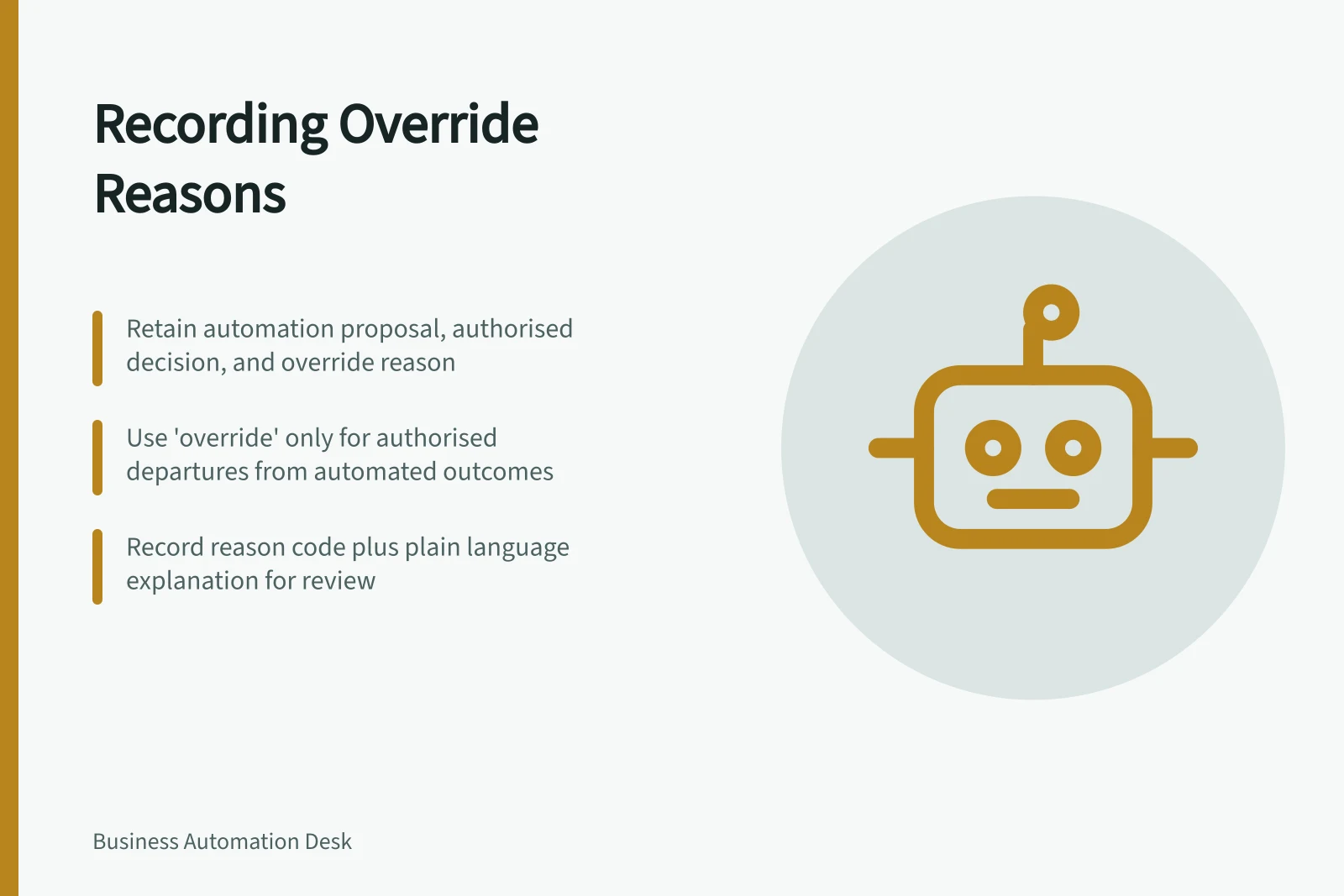
Record the original automated proposal, authorised human decision, reason and confirmed result when an outcome is overridden.
When a person deliberately chooses an outcome different from the automation’s proposal, retain the proposal, the authorised decision and the reason for the difference. Record the downstream result separately. A final status alone cannot show what changed or why.
Define the event being recorded
Use “override” for an authorised departure from an automated recommendation or rule-based outcome. Correcting a misread input before a decision is an input correction, while repairing a failed destination write is recovery work. A later reconsideration of an already final decision may require its own review route. Record these events, but do not combine them in an override count.
The process owner should define who may change which proposed outcome and whether approval must precede execution. A control labelled “override” does not itself grant decision authority. If someone acts outside the authorised route, preserve the event for review rather than presenting it as an approved override.
Capture the reason when the decision changes
A compact case record should answer:
- Which case, source facts and source version were considered?
- What did the automation propose, and under which rule or workflow version?
- Who made the different decision, when and under what authority?
- Which material fact, exception or judgement explains the change?
- What action followed, and what result was confirmed in the destination?
A reason code can group cases, but allow enough plain language to explain the material circumstance. “Other” without an explanation is difficult to review. Keep the proposal, human decision and execution in sequence. If the decision changes again, add an event rather than replacing the earlier one.
For example, an automated rule may propose declining a fictional request under its ordinary criteria, while an authorised reviewer permits a documented exception under the organisation’s own policy. The record should identify the proposal, applicable exception authority, reviewer’s reason and actual result. The example states no real organisation’s policy.
Make the reason usable
Record enough for the responsible owner to assess whether the departure reflects a legitimate exception, a faulty input, an outdated rule or an action outside authority. Refer to supporting material under the organisation’s access rules instead of copying unnecessary personal detail into a free-text field. Set access, retention and disposal according to the information and obligations that apply to the organisation.
Review reasons by rule version, then inspect individual cases before changing a rule. A cluster can prompt investigation but cannot establish its cause alone. Compare each authorised decision with the destination result: a permitted override that was never executed remains open work.
Key Compliance Requirements for Override Governance
- Access control
- Defined by process owner; must align with role-based access
- Retention period
- Governed by organisational obligations and data protection laws
- Review frequency
- Regular audits by responsible owner; triggered by clusters of overrides
- Rule version tracking
- Overrides must be traceable to specific rule or workflow version